

If your dog sheds the way Juno does, you already know the problem. You buy a nice bed, your dog loves it, and within a week the cover is matted with hair, the corners smell like damp dog, and the whole thing is too big for the washing machine. I went through three beds before I figured out what actually matters. This is the process I wish someone had walked me through years ago, and the bed that finally made it all click was the Bedsure Orthopedic Dog Bed.
I am Mark Ellison. I am 58, retired from the mail service, and I live in Tacoma with my wife Carol, our dog Juno, and our cat Pepper. Juno is a 62-pound mixed breed with a dense undercoat that sheds year round, and she loves the wet Pacific Northwest yard, which means she tracks in mud and hair all day. I have washed more dog bedding in the last two years than I did in thirty years of carrying mail. Here is what I learned.
Stop fighting the fur. Get a bed you can actually wash.
The Bedsure Orthopedic Dog Bed has a removable, machine-washable cover that handles Juno's undercoat better than any bed we have owned. Check today's price on Amazon and see if it fits your dog's size.
Amazon Check Today's Price on Amazon →Step 1: Measure your dog, not the room
The biggest mistake I made with the first bed was buying by eye. I looked at Juno stretched out on the living room floor, guessed her length, and ordered a bed that was too small. She curled up fine, but when she stretched out in her sleep, her legs hung off the edge and she kept scooting the bed across the floor. I remember one night in particular, around 2 in the morning, when she kicked the whole bed against the wall and ended up with her head on the hardwood and her back end still on the mattress. That was the night I admitted the bed was wrong.
Measure your dog from the tip of the nose to the base of the tail while they are lying down in their natural sleeping position. Add six to eight inches. That is the minimum bed length you want. For Juno, that meant a large bed, and the Bedsure Orthopedic Dog Bed in large gives her enough room to stretch without hanging off. I measured her three times on three different days because she curls up differently depending on the temperature. The longest measurement was the one I used.
Also measure the space where the bed will live. A bed that fits the dog but blocks the hallway is a bed that gets tripped over. I cleared a corner of the living room, measured it, and then matched the bed size to both the dog and the spot. The corner is about 40 inches wide, which gave me room to spare with the large size. I also left a little gap behind the bed so the wall does not trap heat and moisture against the cover.
Step 2: Check the cover comes off completely
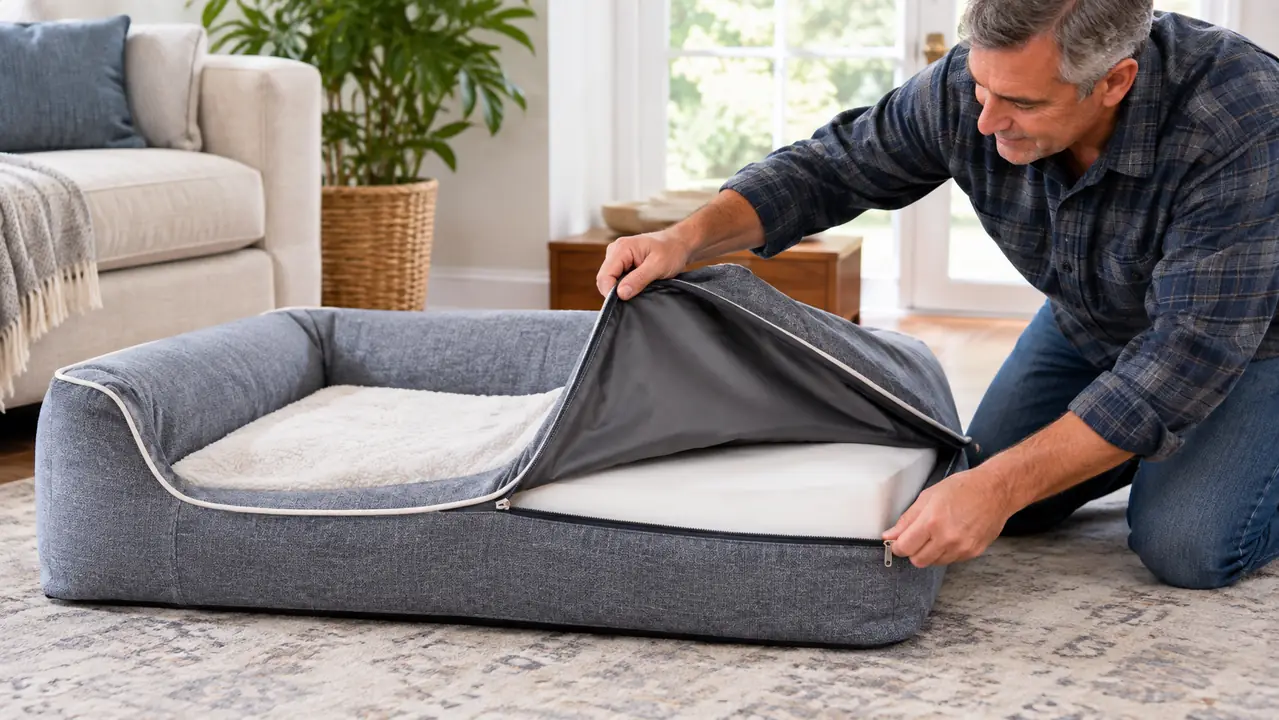
This is the step I skipped for years. A bed can say washable on the box and still be a pain in the neck. Some covers are only spot cleanable. Some are attached to the foam. Some have zippers that stop halfway and make you wrestle the foam out through a tiny gap. My second bed was exactly that: a partial zipper that stopped about eight inches from the end. I had to fold the foam in half and squeeze it through, and every time I did, I swore I would never buy another bed like it.
The Bedsure cover unzips all the way around and comes off like a pillowcase. The foam core stays put, and the cover goes into the wash by itself. That sounds like a small thing, but when you are washing a dog bed every week, a cover that comes off easily is the difference between a ten minute chore and a forty minute wrestling match. The first time I washed the Bedsure cover, I timed it. From the moment I started unzipping to the moment the cover was in the machine was about two minutes.
Look for a full perimeter zipper, not a partial one. And check that the zipper is sturdy. The first bed I owned had a cheap zipper that snagged on the fabric after three washes. The Bedsure zipper has held up through months of weekly washing. I have washed that cover at least twenty times since we got it, and the zipper still runs smooth. That is the kind of detail you only notice when it is missing.
Step 3: Match the wash instructions to your real life
Read the care tag before you buy, not after. Some beds require cold water only, some cannot go in the dryer, some need line drying for two days. If you live somewhere damp like Tacoma, a bed that cannot go in the dryer is a bed that smells like mildew by the time it dries. I learned that with the second bed, which I hung on the line for a full day in November. It was still damp at dinner time, and the smell never really went away.
The Bedsure cover is machine washable and dryer safe on low. I wash it with a little detergent and a splash of white vinegar to cut the dog smell, then dry it on low. It comes out clean and ready to go back on the same day. That matters when Juno has already claimed the couch as her backup bed. On wash day, I put the cover back on while it is still slightly warm from the dryer. It fits easier and it gives Juno a cozy spot that smells fresh instead of like wet dog.
Also think about how often you will actually wash it. If you wash weekly, you need a cover that survives repeated cycles. If you wash monthly, you can get away with something less durable. Be honest with yourself about which one you are. I am a weekly washer, mostly because Juno comes in from the yard with mud on her paws and damp on her coat. The Bedsure cover has taken every weekly wash without fading or pilling, and the fabric still feels the same as it did the first week.
Step 4: Look at the foam, not just the fabric
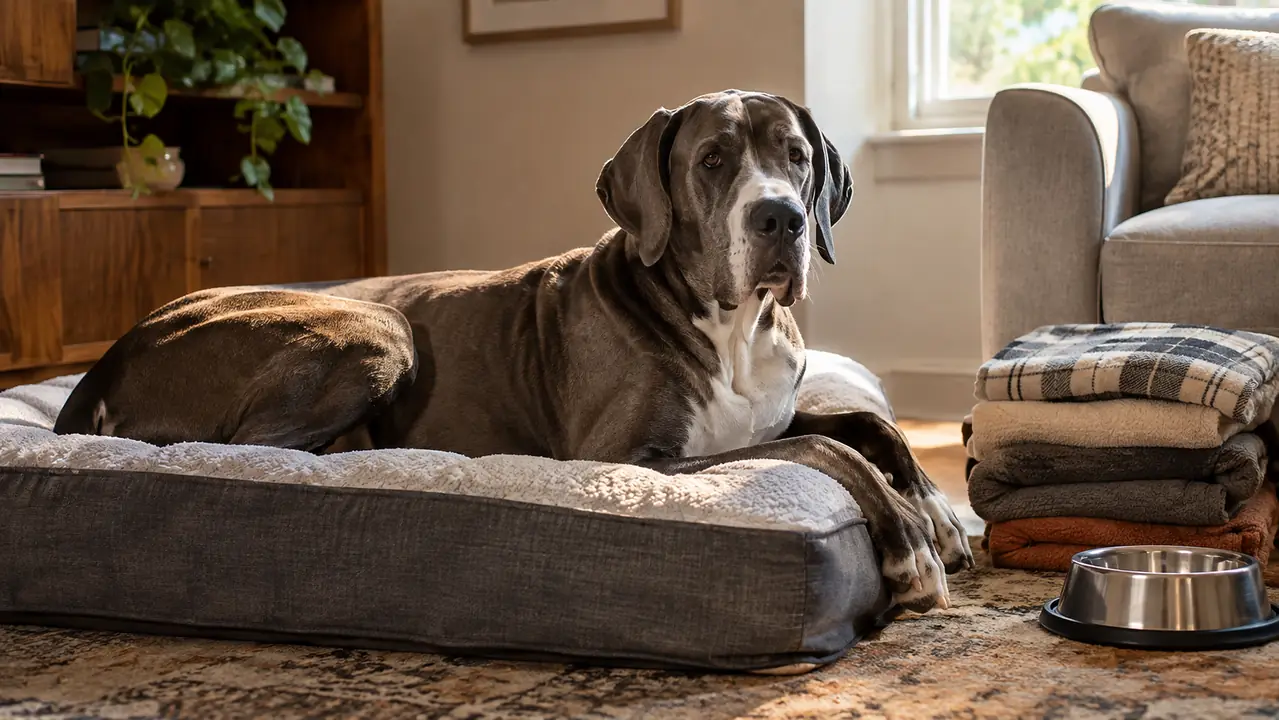
A washable cover is useless if the foam underneath goes flat in three months. The first cheap bed I bought had a thin layer of foam that compressed into a pancake. Juno ended up sleeping on the floor next to it, which defeated the whole purpose. I could press my hand into that foam and leave a dent that took a full minute to spring back. After about six weeks, the dent never sprang back at all.
The Bedsure Orthopedic Dog Bed has a thick foam base that supports Juno's 62 pounds without bottoming out. She is seven years old now, and she sleeps more soundly on this bed than she did on the floor or the couch. I cannot make medical claims, but I can tell you she chooses this bed over every other spot in the house. On a typical evening, she circles the bed twice, flops down with a sigh, and stays there until morning. That did not happen with the first two beds.
Check the foam thickness and the density. A good test is to press your hand into the foam and see how quickly it springs back. If it stays dented, it will not last. The Bedsure foam springs back quickly, and after months of daily use it still supports her the way it did on day one. I checked it again last week, about seven months in, and the foam still feels firm under my hand. That is the test that matters more than any label on the box.
Step 5: Buy the right size and set it up for success
Once you have measured, checked the zipper, confirmed the wash instructions, and inspected the foam, the last step is ordering the right size and setting it up so your dog actually uses it. Juno ignored the first bed I brought home because I put it in a corner she never used. I moved it next to her favorite sunny spot, and she was on it within the hour. Location matters more than most people think.
When the Bedsure bed arrived, I let it expand for a day in the living room before letting Juno near it. The cover went on easily, the foam filled out, and by evening she had claimed it. I also put a spare cover on my list so I can swap one while the other is in the wash. That has been the single best trick for keeping a shedding dog's bed clean. On wash day, I take off the dirty cover, put on the clean spare, and the bed is back in service in about five minutes. The dirty cover goes in the wash without any rush.
Set the bed in a spot your dog already likes, keep it out of direct foot traffic, and wash the cover on a regular schedule rather than waiting until it looks bad. A bed that is clean and in the right spot gets used. A bed that is dirty and shoved in a corner gets ignored. I wash the cover every Sunday morning now, and Juno knows the routine. She waits by the bed while I swap the covers, then climbs on the fresh one and settles in for her morning nap.
What Else Helps
A washable bed is the foundation, but a few extras made the biggest difference for us. A rubber curry brush pulls Juno's loose undercoat out before it ends up on the bed. I brush her on the back porch for about five minutes every other day, and the amount of hair that comes off is honestly startling. A washable blanket on top of the bed catches the worst of the mud and hair, and it is even easier to throw in the wash than the bed cover. And a waterproof liner under the bed protects the floor from the damp that comes off a wet dog. None of these are expensive, and together they cut our laundry load in half.
The Bedsure cover unzips all the way around, goes in the wash by itself, and comes out dry the same day. That is the whole ballgame for a shedding dog.
Give your shedding dog a bed you can keep clean
The Bedsure Orthopedic Dog Bed is the one we landed on after three failures. It washes well, supports Juno's 62 pounds, and has held up for months. Check today's price on Amazon and see which size fits your dog.
Amazon Check Today's Price on Amazon →