
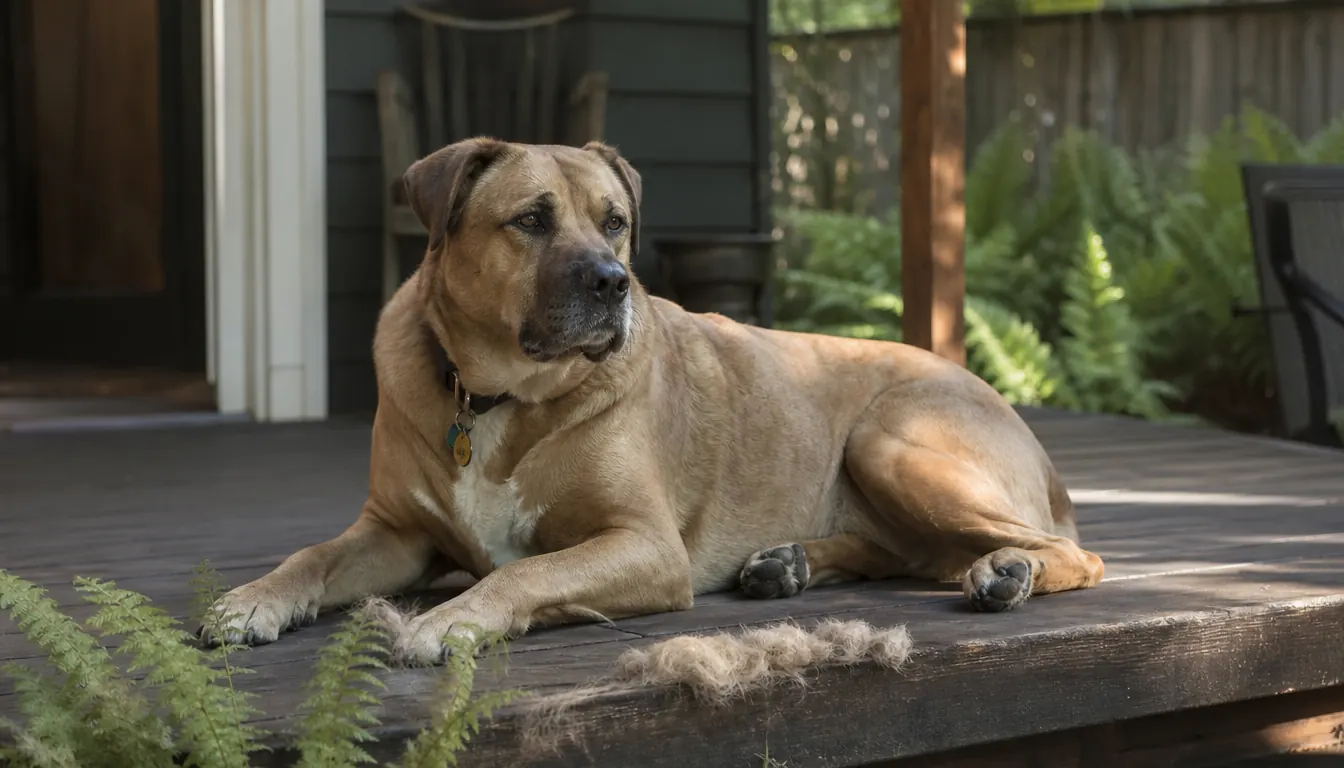
Every spring, our hallway looked like a third animal lived in the house. Not Juno, the 62-pound mixed breed who has owned us for seven years, and not Pepper, the cat who sleeps on the back of the couch. Something else lived there, something made entirely of the fur those two left behind. Juno has a short coat with a dense undercoat, and in Tacoma she sheds year round. By late winter the baseboards grew a gray fringe, the vacuum bag filled twice as fast as it should have, and Carol started leaving the broom by the front door out of pure habit.
I tried the usual things before I bought the FURminator Large Dog Undercoat deShedding Tool for Short Hair. A slicker brush took care of the topcoat and left the undercoat alone, so the shedding never stopped. A shedding blade pulled real hair but made a noise Juno hated, and she would slink off after about thirty seconds. A rubber curry mitt was fine for a quick once-over and useless for the kind of shedding we live with. Then a neighbor who keeps two huskies told me to stop guessing and buy the FURminator. I ordered it on a Tuesday, it showed up Thursday, and I have used it two or three times a week ever since. This is the review I would have wanted before I bought it.
The Quick Verdict
It does the one job it promises: it pulls the loose undercoat out before it lands on your floors. Six months in, it still works like the day it arrived. Use it outside, use it gently, and it will earn its spot in the closet.
Amazon Check Today's Price →Six Months of Undercoat That Never Hit the Floor
If you are tired of vacuuming fur off the baseboards every other day, this is the tool I reach for first. Ten minutes on the back step pulls out the loose undercoat that would otherwise end up on the couch, the carpet, and your work pants.
Amazon Check Today's Price on Amazon →How I've Used It
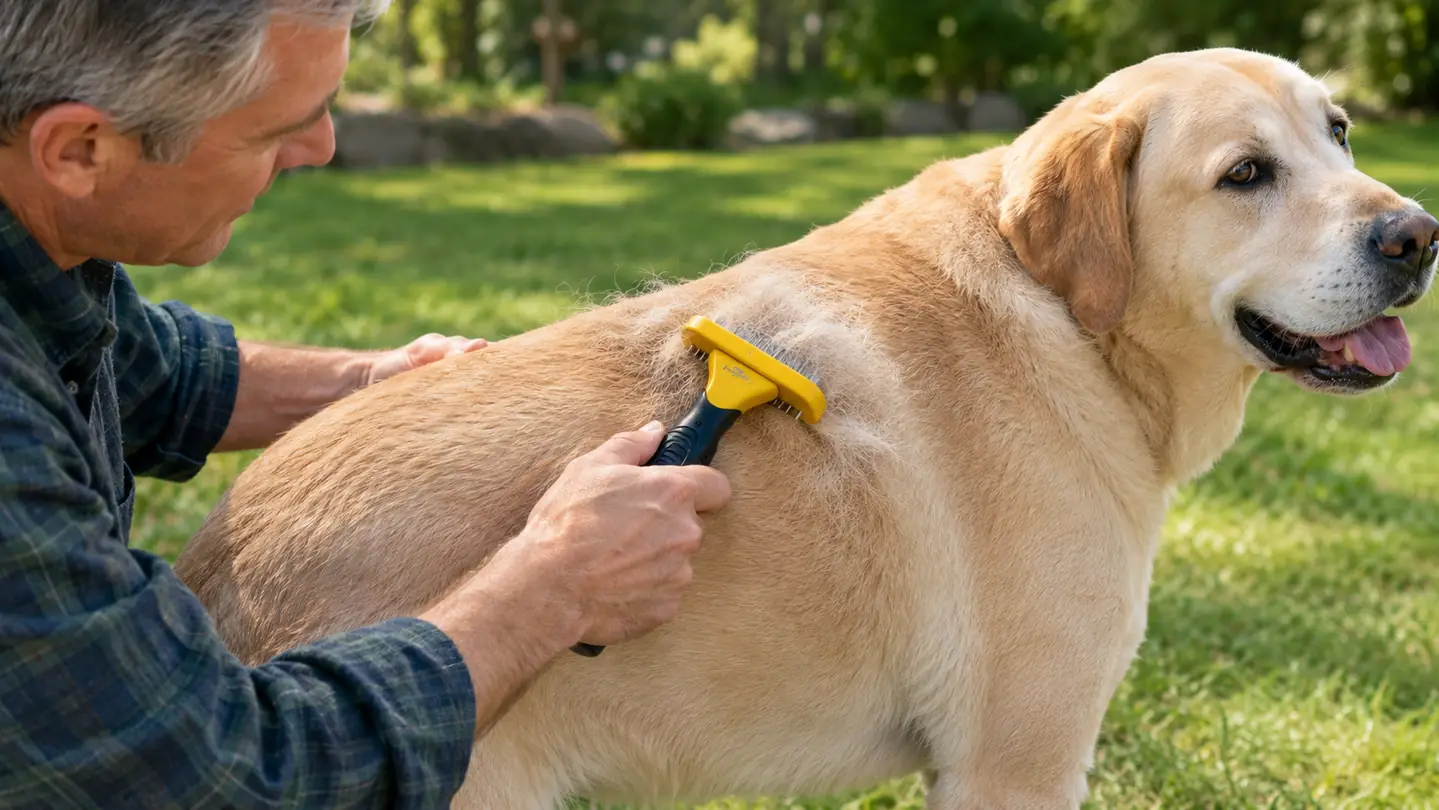
My routine is simple. Two or three times a week, more often in the spring when Juno blows her coat, I take her out to the back step and run the FURminator over her in the direction the hair grows. Long, slow strokes, light pressure. After three or four strokes the blade is full, so I push the FURejector button on top, the hair pops off in a neat mat, and I drop it on the grass for the birds. A full session takes about ten minutes. Twenty if she is shedding hard.
The first Saturday I used it, I filled a sandwich bag with undercoat and Juno sat through the whole thing without moving. Carol came out, looked at the pile, and said, 'That explains the hallway.' Since then the change has been steady rather than dramatic. The baseboards still collect some fur, because a dog who loves the mud as much as Juno does is never going to be a no-shed house. But the hallway no longer looks like a third pet, and that is the whole ballgame. In the summer she sheds less, so I drop to once a week just to stay ahead. In the winter, with the house closed up and the heat running, the fur builds up faster, and that is when twice a week matters.
I also take the tool to the car once a month and run it over the back seat. The short teeth grab the hair that is woven into the upholstery, and the FURejector button clears it into the floor mat, where I can pick it up and throw it away. That was a bonus I did not expect when I bought it.
What the FURminator Actually Does
Here is the part I did not understand until a friend explained it. Short-coated does not mean single-coated. Juno has a sleek topcoat and, underneath it, a dense undercoat that she sheds in stages all year. A normal brush slides over the topcoat and never touches the undercoat, which is why the shedding never seemed to stop no matter how often I brushed her.
The FURminator is built differently. The edge is a stainless steel blade with short teeth set at an angle, and it is designed to reach through the topcoat, catch the loose undercoat hairs, and pull them out without cutting or scraping the skin. The blade does not shave. It does not cut. It grabs the hair that is already loose and lifts it out before it drifts around the house for a week. The first time I used it, I expected to see a little loose hair. What came out was a solid mat of undercoat, the kind of thing you would expect to find behind the couch, not on the dog. That was the moment I understood what the tool was for.
The version I bought matters. FURminator makes this tool for short hair and for long hair, and the short-hair version has shorter teeth. I have the Large Dog model for Short Hair because Juno is 62 pounds and her coat is dense. A friend with a collie uses the long-hair version, and the two tools look similar but are not interchangeable. Wrong version, wrong result.
The FURejector button is the detail that makes it usable. Without it, you would spend half the session picking hair off the blade. With it, you push, the hair slides off in one piece, and you keep going. It sounds like a small thing. It is the difference between a ten-minute job and a forty-minute one.
What Six Months of Use Looked Like
The clearest number from our house is the vacuum. Before the FURminator, I emptied the canister every other vacuuming, and sometimes every time. Now it goes three or four vacuumings between empties, and most of what comes out is dust and mud instead of fur. That is the whole story in one measurement.
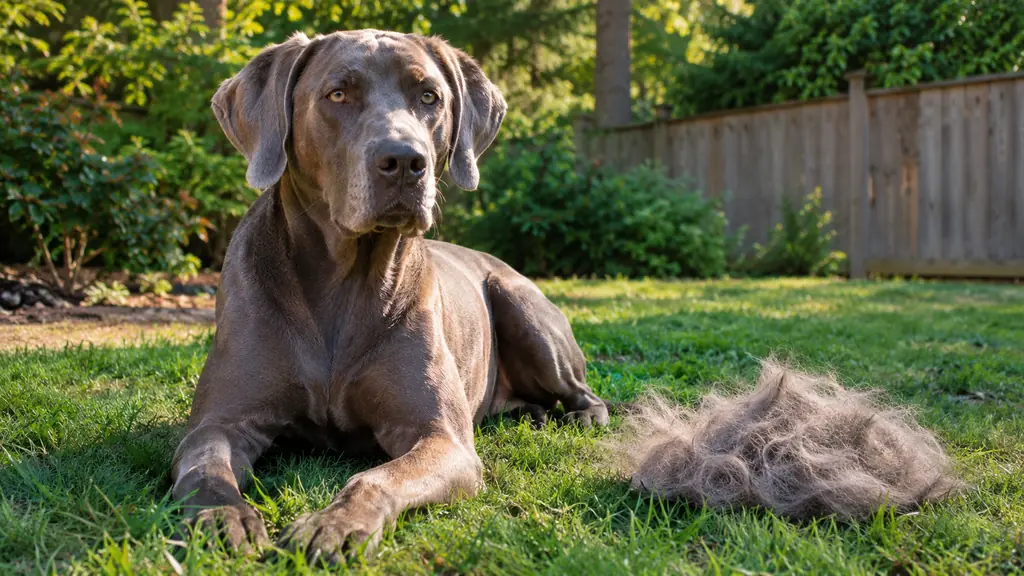
The spring coat blow was the real test. In late March and April, Juno sheds her undercoat in earnest, and that is when the hallway used to earn its reputation. This year I brushed her every other day, and each session pulled out a full sandwich bag of fluff. On a Sunday in mid-April I brushed her for twenty minutes and pulled out enough to fill a paper grocery bag. I spread it on the grass, and the birds had taken most of it for nest material by Tuesday.
Six months in, the tool itself has held up. The edge still catches hair the way it did in January. The button still works. It has been rained on once, because I left it on the step overnight, and it dried without rusting, though I do not make a habit of it. The teeth have not bent, the edge has not dulled to the point I can tell a difference, and the handle has not cracked, which is more than I can say for a plastic shedding blade we owned for about four months. The handle is comfortable enough for a full session, and the whole thing wipes clean under the hose.
Juno is the same dog she was before, which is the point. Seven years old, 62 pounds, happy to sit on the step while I brush her. The tool does not change her coat, and it does not change her shedding. It just moves the shedding from the hallway to the grass, where it belongs.
On a Sunday in mid-April, the FURminator pulled out enough undercoat to fill a paper grocery bag. That is a hallway that never got to be a problem.
The Annoying Parts
The first thing nobody tells you is that the hair has to go somewhere. The FURminator pulls the undercoat out in clumps, and those clumps drift. If you use it inside, you are trading baseboard fur for airborne fluff that settles on everything. I do it on the back step, or right inside the door on a floor I can sweep. That is not a flaw in the tool. It is a fact of life with any deshedding brush.
The second thing is that you have to use a light hand. Press too hard, or work the same spot too long, and you can irritate the skin. I learned this the way I learn most things, by doing it slightly wrong for a week. The first few days I bore down like I was scrubbing a grill, and Juno started flinching when I brushed one spot on her side. I backed off, let that spot rest for a few days, and it was fine. The fix is simple: let the tool do the work, and stop when the blade stops pulling hair. If you are dragging the tool and no hair is coming out, you are done with that spot.
The FURejector button jams now and then. A wad of hair works its way into the mechanism, and you have to pull it out with your fingers. It takes five seconds and it happens maybe once a month. Mildly annoying, not a dealbreaker.
It costs more than a standard brush, and you have to decide whether the tradeoff is worth it for your house. It also does not fix everything. If your dog has mats, this is not the tool you need first. The blade will not pull through a tangle, and forcing it just pulls the dog's skin. Work the mats out first, then use the FURminator on the loose undercoat.
What We Tried Before
I want to be fair about the alternatives, because none of them were useless. The slicker brush is still in the closet, and Carol uses it on the couch cushions to pull up the hair that works its way into the fabric. But on Juno's back it just skated over the topcoat. The undercoat stayed put, and the shedding continued.
The shedding blade was the opposite problem. It pulled real hair, a lot of it, but it made a metallic rasping sound that Juno hated. She would let me get maybe thirty seconds in before she moved away, and a tool you can only use for thirty seconds is not a tool you can use at all. The rubber curry mitt was fine for a quick scratch and a bit of loose hair, but it never got down to the undercoat.
The FURminator was the first thing that combined the two things we needed: it actually reached the undercoat, and Juno did not mind it. She sits for the whole session now. I think the even pressure and the quiet glide matter to her. Whatever the reason, the ten-minute routine stuck, and the shedding moved outside.
What I Liked
- Pulls the loose undercoat out in minutes, before it ends up on the floors
- Reaches a short, dense coat like Juno's without cutting or scraping
- The FURejector button clears the blade fast, so a full session takes about ten minutes
- Comfortable handle, easy to grip even with damp dog hair on your hands
- Still works like new after six months of two to three uses a week
- Works on the car upholstery too, which I did not expect
Where It Falls Short
- You have to use it outside or over a floor you can sweep; the hair flies
- Press too hard and you can irritate the skin, so it takes a light hand
- The hair-release button jams with a wad of fur now and then
- Not for matted coats; you have to detangle before you deshed
- Costs more than a standard brush
- Only earns its keep if you actually use it a couple of times a week
Who This Is For
Buy the FURminator if your dog has an undercoat and you are tired of living in it. It is for short-coated dogs with dense undercoats, the Labs and shepherds and mixed breeds like Juno, the dogs whose shedding never really stops. It is for people who can spend ten minutes outside or on a washable floor a couple of times a week. It is for anyone who has ever emptied a vacuum bag and wondered how one 62-pound dog can produce that much fur. If that sounds like your house, this tool will earn its keep by the end of the first week.
Who Should Skip It
Skip it if your dog has mats or tangles, because you need a dematting tool first and this will not fix the problem. Skip it if your dog has a skin condition, and check with your vet before you use any deshedding tool. Skip it if your dog has a single coat with no undercoat, like a Boxer or a Doberman, because the blade will have nothing to grab. Skip it if you are not going to brush regularly, because one session a month will not keep up with a shedding dog. And if you have a long-haired dog, buy the long-hair version, not this one. We left Pepper alone with the large dog tool, because an 11-pound cat has no business being brushed with something built for a 62-pound dog. FURminator makes a cat version, and that is the one to get.
The First Thing I Grab on Shedding Days
Six months in, the FURminator still does the job in about ten minutes. If your dog has an undercoat and you are tired of vacuuming it up, this is the tool I would buy again without thinking twice.
Amazon Check Today's Price on Amazon →