
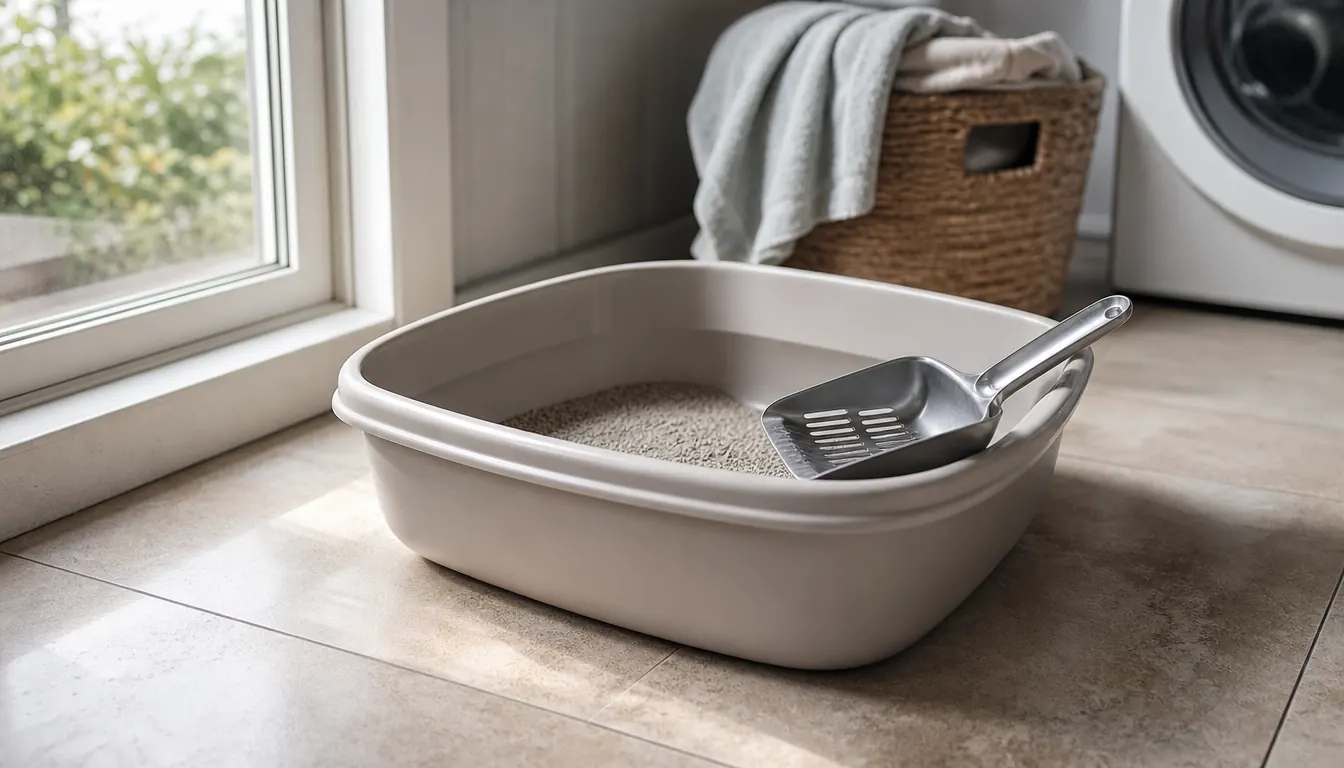
Here is the thing about a litter box in a small house: you do not get to ignore it. I am Mark Ellison, and after I retired from the mail route, I found myself home all day with our cat Pepper, our dog Juno, and a litter box that used to announce itself the moment you walked in the front door. Pepper is a 10-year-old indoor shorthair, 11 pounds, picky about food and pickier about litter. If the box is not clean enough for her standards, she lets us know by using the bath mat instead. So I have spent the last couple of years figuring out a routine that keeps the box fresh without turning the laundry room into a chemistry experiment.
The short version: the litter matters more than the scooping schedule. We switched to Dr. Elsey's Ultra Unscented Clumping Clay Cat Litter, and it changed the math. The clumps hold together, the odor control actually lasts, and the unscented formula means I am not trading one smell for a stronger perfume smell. This is the routine I use now, step by step, with the exact details that made it work for us.
Start with a litter that clumps hard and stays put
Dr. Elsey's Ultra is the bag I reach for every time. It clumps fast, holds the clump together when you scoop, and does not try to cover the smell with perfume.
Amazon Check Today's Price on Amazon →Step 1: Fill the box deep enough to actually clump
The biggest mistake I made for years was being stingy with the litter. I would pour in a thin layer, Pepper would dig down to the plastic, and the urine would pool on the bottom of the box. That is how you get a box that smells like ammonia no matter how often you scoop. With Dr. Elsey's Ultra, I fill the box to about three inches. That depth gives the litter enough material to form a solid clump around the urine instead of letting it soak to the bottom.
Three inches sounds like a lot when you are pouring from an 18-pound bag, but it is the difference between a five-minute scoop and a twenty-minute scrape. The bag lasts us about three weeks with one cat, and the box stays fresher the whole time. If you have a larger cat or more than one cat, go deeper. The clumping litter needs enough body to do its job.
I will tell you exactly how I landed on three inches, because it was not in any instructions. The first bag of Dr. Elsey's Ultra I bought, I poured in maybe an inch and a half, figuring I would stretch the bag. By the third day, Pepper had dug a hole down to the plastic in the corner she prefers, and I found a wet spot that would not scoop up. I dumped the box, refilled it to three inches, and marked the side of the box with a piece of tape at the right level. Now I pour to the tape line and I do not have to guess. That tape has been there for a year and a half, and it is the cheapest litter box upgrade I have made.
Step 2: Scoop once a day, and do it the same time every day
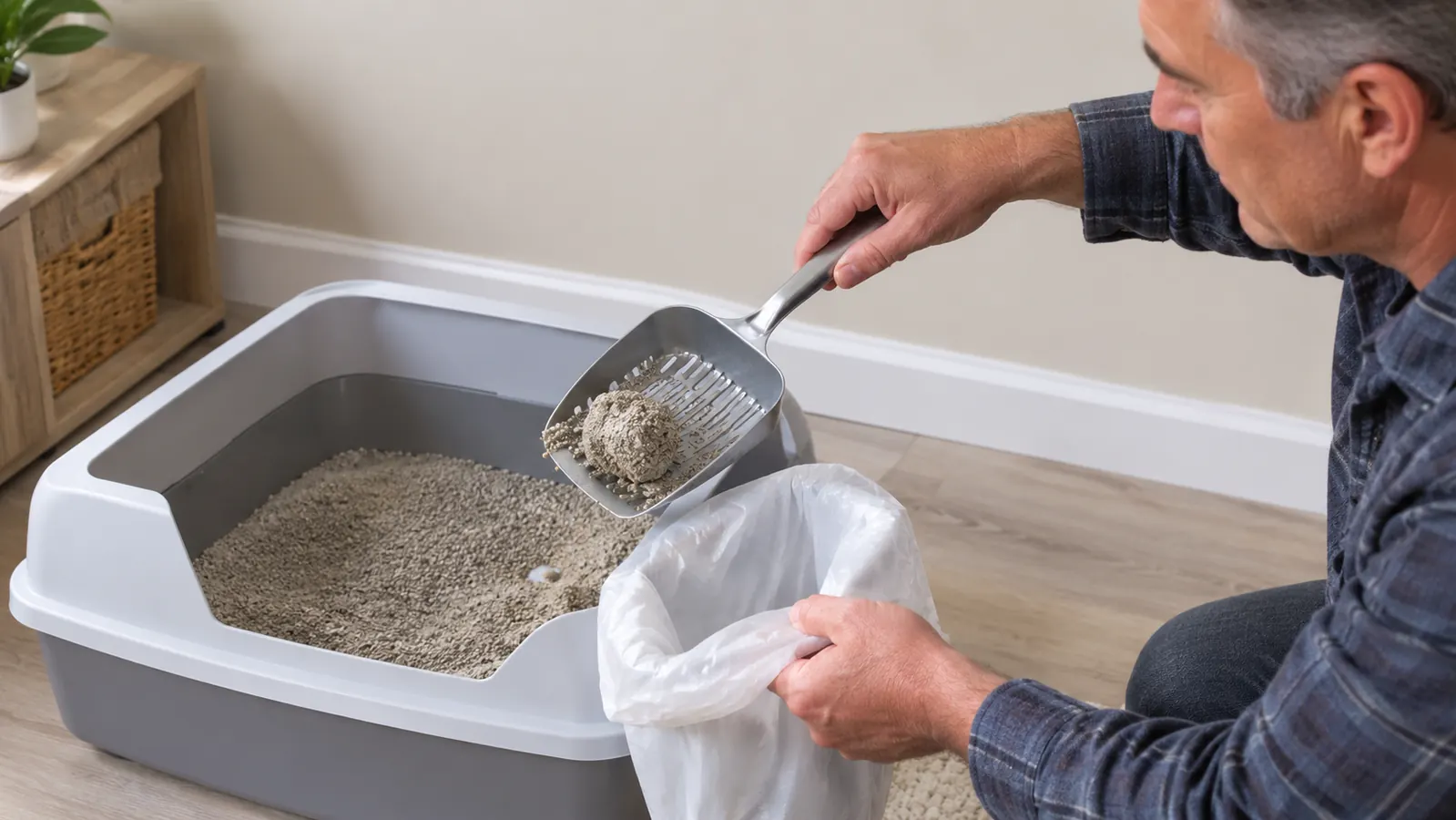
I scoop every morning after coffee. Not because I love it, but because a daily scoop with a good clumping litter takes about two minutes, and a skipped day turns into a ten-minute job with a scraper. Dr. Elsey's Ultra forms clumps that hold their shape, so the scoop comes up clean and the litter underneath stays dry. When I used cheaper clay litters, the clumps would crumble halfway to the trash bag and I would be chasing pieces around the box.
The routine matters more than the timing. Pepper uses the box overnight, so morning scooping catches everything before the house starts to smell. I keep a small trash bag and a metal scoop right next to the box. No walking across the house with a dripping scoop. No excuses. Two minutes, done, and the box is ready for the day.
One thing I learned the hard way: do not use the flimsy plastic scoop that comes with some boxes. I did for the first month, and the slots were so wide that half the clump fell back through. I switched to a metal scoop with narrow slots, and the daily job went from frustrating to boring, which is exactly what I wanted. Boring means I do it without thinking, and doing it without thinking means the box never gets bad enough to notice.
Step 3: Top off with fresh litter after every scoop
This is the step most people skip, and it is the one that keeps the box from ever getting that sour smell. After I scoop out the clumps, I pour in a little fresh Dr. Elsey's Ultra to bring the level back up. It takes about a cup, maybe two. That fresh layer on top gives Pepper clean litter to dig in and keeps the remaining litter from getting saturated.
The unscented formula matters here. Some litters pile a perfume layer on top of the old litter, and after a week the box smells like a candle shop that has not been cleaned. Dr. Elsey's Ultra does not do that. The odor control comes from the clay itself, so topping off with fresh litter actually refreshes the box instead of just adding another layer of scent.
I keep a one-cup scoop in the bag of litter, not the big cup from the box. That way I am not guessing how much to pour. One cup after the morning scoop, one cup after the evening scoop if there was anything to take out. It sounds fussy, but it takes ten seconds, and it means the level in the box never drops below the tape line I marked in step one. The box always looks freshly filled, and Pepper never has to dig for a clean spot.
Step 4: Do a full dump and wash once a month
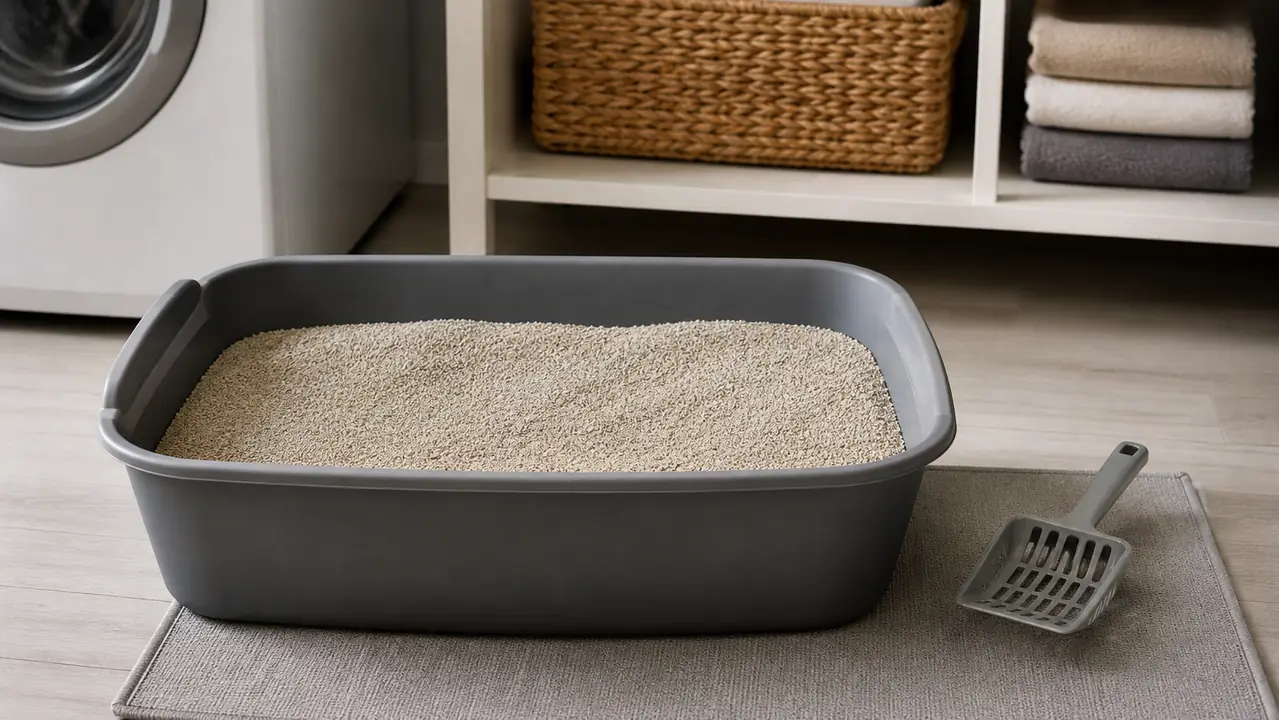
Even with daily scooping, the litter box itself needs a reset. Once a month I dump the whole box, wash it with warm water and a mild dish soap, dry it completely, and refill with fresh Dr. Elsey's Ultra. This is the step that keeps the box from developing that permanent odor that no amount of scooping can fix. The plastic absorbs smells over time, and a monthly wash is the only thing that gets them out.
I learned this the hard way. Before I started the monthly wash, the box would start to smell after a few weeks no matter how often I scooped. I blamed the litter, but the problem was the box itself. Now the monthly reset takes about fifteen minutes, and the box smells like nothing, which is exactly what a litter box should smell like.
I do the wash on the first Saturday of the month, and I put it on the calendar so I cannot talk myself out of it. The trick that made it painless: I keep a second box in the garage, so Pepper has somewhere to go while the main box dries. The first time I did the wash, I left her with nothing for four hours and she let me know about it. Now I swap the boxes, wash the dirty one, and let it air dry in the sun for the afternoon. The sun does more than the soap, honestly. It kills the smell that soap misses.
Step 5: Place the box where air moves but Pepper feels safe
Location is half the battle. Our box is in the laundry room, which has a window we crack open year round. The air movement carries odors away before they settle into the house. But Pepper will not use a box that feels exposed, so the box sits in a corner with one side against the wall. She gets privacy, and we get ventilation.
If your only option is a bathroom or a closet, leave the door cracked and consider a small fan. The goal is air movement without making the cat feel like she is using the bathroom in the middle of a highway. A covered box can trap odors inside, which makes the smell worse when you open the lid. We use an open box and let the room do the work.
I moved the box three times before I found the right spot. It started in the hallway, where Pepper used it fine but the whole house smelled. Then I tried the basement, and she stopped using it entirely, which is how we ended up with the bath mat incident. The laundry room was the compromise: a window for air, a corner for privacy, and a door we can close when company comes over. If your cat suddenly stops using the box, check the location before you blame the litter. Cats vote with their paws.
What Else Helps
A few things made the routine easier without being strictly necessary. A good metal scoop with narrow slots gets the clumps without dragging half the box out with them. A litter mat outside the box catches the granules Pepper kicks out, and I shake it into the trash once a week. And I keep a spare box in the garage so the monthly wash does not leave Pepper without a place to go.
The biggest helper, though, is the litter itself. Dr. Elsey's Ultra is a fine-grained clay that clumps on contact. That means less dust when I pour it, less tracking around the house, and clumps that do not fall apart in the scoop. It is not the cheapest bag on the shelf, but it lasts longer because I am not throwing away half the box every time I scoop.
One more thing: I stopped buying the scented version of anything. With a perfumed litter, the box smells fine for two days and then the perfume mixes with the ammonia and makes a smell that is somehow worse than no litter at all. The unscented Dr. Elsey's Ultra does not have that problem. If the box smells, it means I am behind on scooping, and that is a problem I can fix in two minutes instead of a problem I have to mask.
The clumps hold together, the odor control actually lasts, and the unscented formula means I am not trading one smell for a stronger perfume smell.
What I'd Tell You If We Were Sitting at My Kitchen Table
If you came over to my house and asked me how to keep a litter box fresh, I would tell you this: buy a clumping litter that actually clumps, fill the box deep, scoop every day, top it off, and wash the box once a month. That is the whole routine. There is no fancy equipment and no daily deep clean. The work is boring and regular, and the reward is a house that does not smell like a litter box.
Dr. Elsey's Ultra is the litter that made the routine work for us. It is not perfect. The bag is heavy, the price is higher than the store brand, and you still have to scoop every day. But after trying a dozen litters over the years, this is the one I keep coming back to. Pepper approves, Carol approves, and I am the one who does the scooping, so my approval counts double.
Give your cat litter that actually clumps
Dr. Elsey's Ultra is the bag I keep in the laundry room. If your current litter crumbles, perfumes, or stops working after a week, this is worth trying.
Amazon Check Today's Price on Amazon →