
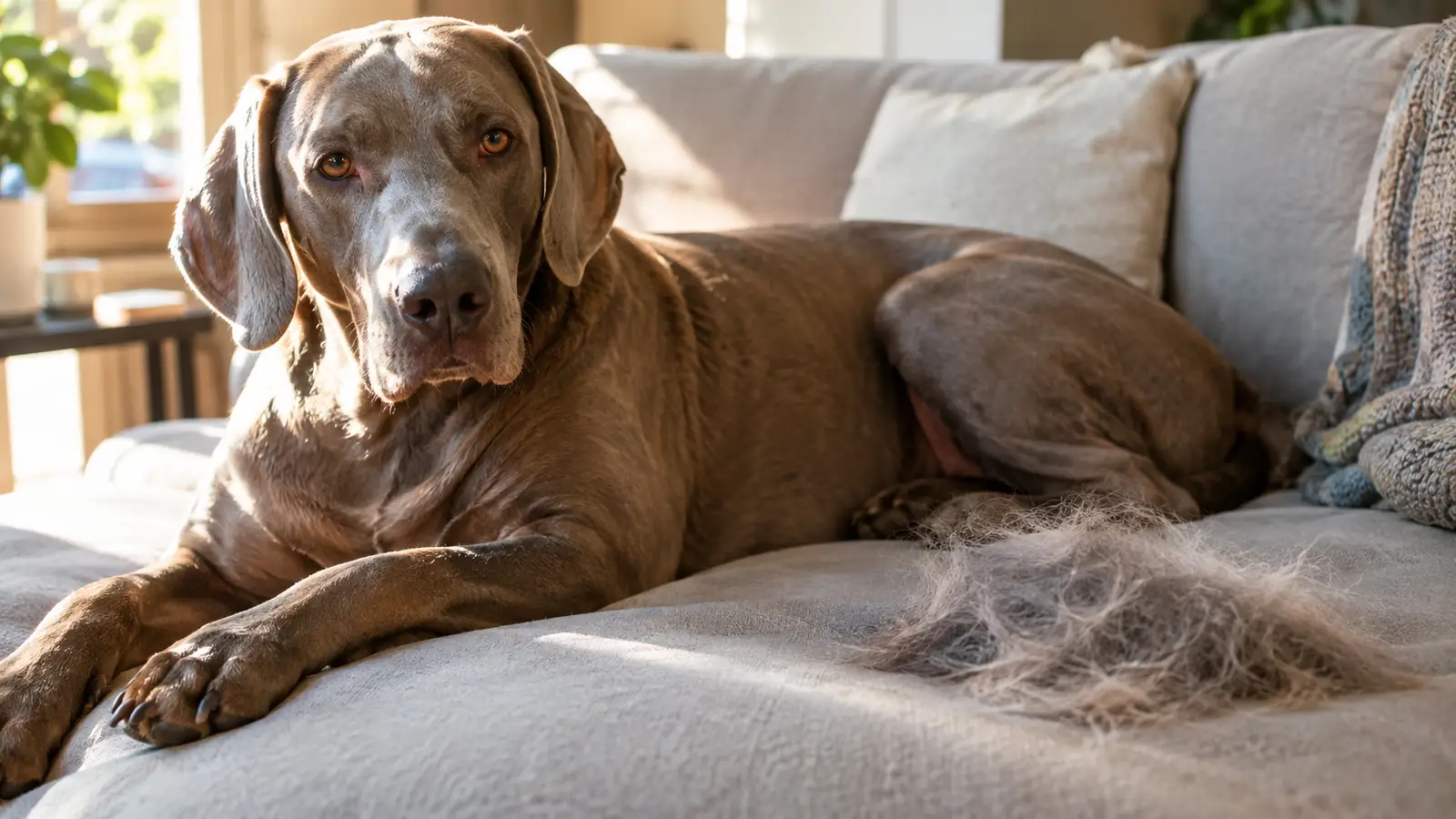
Every couch owner with a shedding dog knows the feeling. You sit down in your favorite spot, and ten minutes later you are picking hair off your pants, off the remote, and out of your coffee. I tried lint rollers, vacuum attachments, and a fabric brush that took twenty minutes and still left the couch looking like Juno had slept on it. Nothing got to the root of the problem, because the hair was not really on the couch yet. It was still in the dog. The FURminator Large Dog Undercoat deShedding Tool for Short Hair is the tool I finally found that gets ahead of the mess instead of chasing it.
I am Mark Ellison. I retired from the postal service a few years back and moved to Tacoma with my wife Carol, our dog Juno, and our cat Pepper. Juno is a 62-pound short-coated mixed breed with a dense undercoat that sheds year round. Our yard is wet most of the year, so she tracks in mud and leaves a fresh layer of hair on every piece of furniture she touches. This guide is the routine I worked out for cutting down the couch hair without making a bigger mess in the process.
The tool that finally put a dent in our couch hair
The FURminator deshedding tool pulls the loose undercoat out before it ends up on your couch. If you have a shedding dog and you are tired of fighting the furniture, this is the tool I reach for every week.
Amazon Check Today's Price on Amazon →Step 1: Brush your dog before you touch the couch
The biggest mistake I made for years was trying to clean the couch after the hair was already there. You can vacuum, roll, and pick for an hour, and the next time Juno jumps up, you are back where you started. The fix is to remove the loose hair from the dog first, while it is still easy to get at.
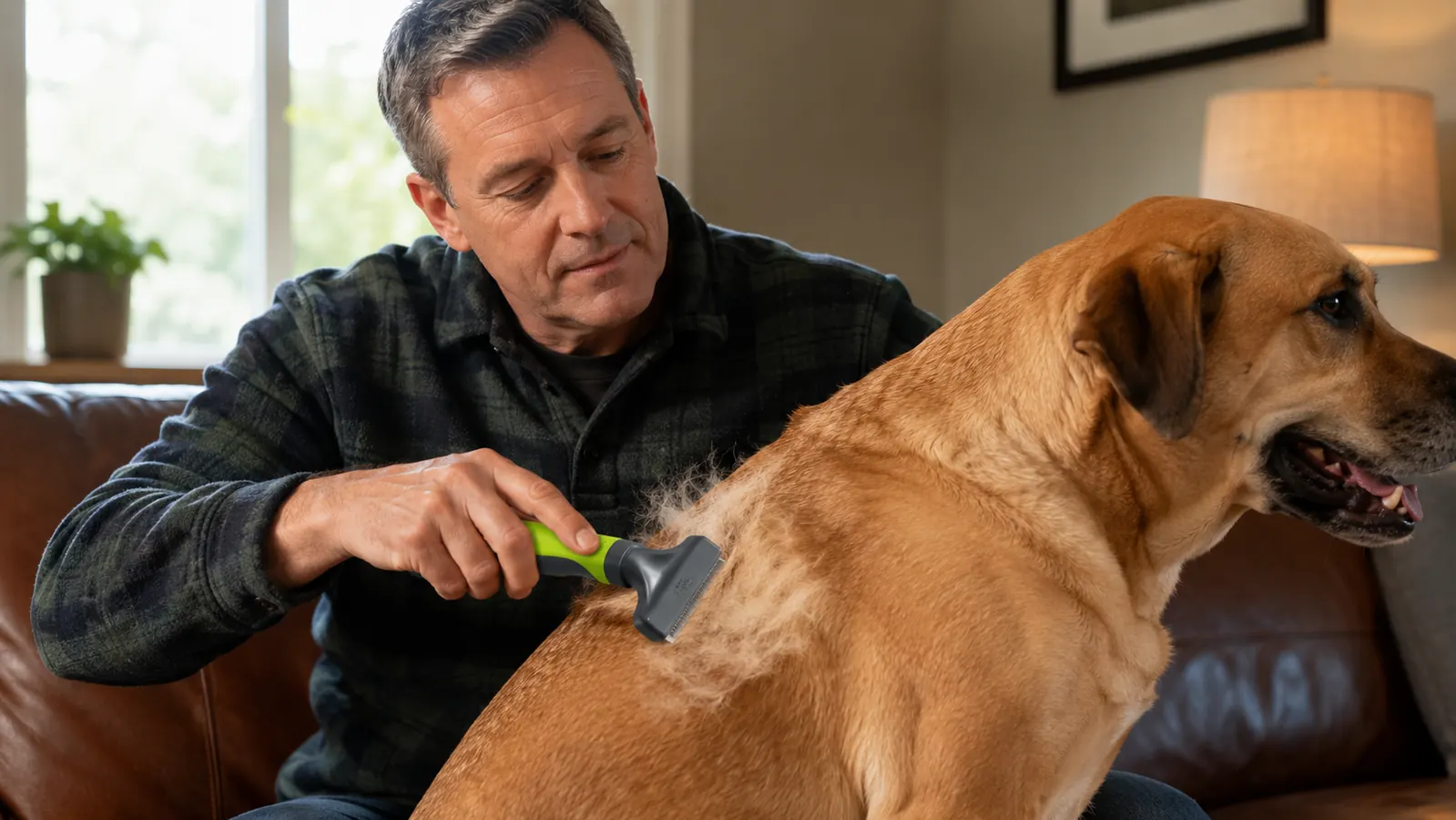
I do this outside on the back steps when the weather cooperates, because the FURminator sends a surprising amount of loose undercoat flying. On wet days, I spread an old sheet on the kitchen floor and brush Juno there. The sheet catches most of the fallout and I can shake it into the trash can in one trip. Five minutes with the tool removes more loose hair than I used to get with a week of vacuuming the furniture.
You want to work in the direction the hair grows, with light pressure. The FURminator has a stainless steel edge that reaches down into the undercoat, so you do not need to press hard. I run it along her back, her sides, and the backs of her legs, and I stop every few strokes to wipe the collected hair off the tool. On the first session of spring, I filled a whole paper grocery bag with the stuff.
The first time I used the FURminator on Juno was a Saturday morning in early March, and I honestly did not expect much. She had been shedding for weeks and I had already vacuumed the couch twice that week. I did one pass down her back, and the tool came up full. By the time I finished her sides and her rear legs, I had a pile the size of a small cantaloupe on the steps. I weighed it once out of curiosity on the kitchen scale: just over four ounces of loose undercoat from one 15-minute session. That was the moment I stopped blaming the couch and started blaming the dog.
Step 2: Put a washable cover on the couch
This sounds too simple to matter, but it is the step that made the biggest difference in our house. A washable couch cover costs a fraction of what a new couch costs, and it catches the hair that still makes it onto the furniture.
I picked a quilted cover with a non-slip backing that stays put even when Juno does her morning circle before lying down. It covers the seat and the back of the couch, and it comes off in about twenty seconds. When it starts to look hairy, I shake it out in the yard and toss it in the wash.
The cover does not replace the deshedding routine. It is the backup that catches what the brush misses. Between the FURminator session and the cover, our couch has gone from a permanent hair magnet to something we can actually sit on without checking our pants first.
I tried a cheaper woven throw first, and it slid off every time Juno jumped up. The quilted cover with the rubberized backing was the second purchase, and it has stayed in place for six months now. I wash it every other Sunday along with Juno's bedding. It comes out of the dryer looking the same as the day I bought it, which is more than I can say for the couch cushions underneath.
Step 3: Use a damp rubber glove for the leftover hair
Even after brushing the dog and covering the couch, a few hairs will find their way onto the cushions. The fastest way I have found to pick them up is a damp rubber glove. You wet your hand, shake off the excess, and run your palm across the fabric. The hair sticks to the glove in one or two passes.
I keep a dedicated glove in the drawer next to the couch for this. It takes about ninety seconds to do the whole seating area, and it works on the dog hair that the vacuum misses in the crevices. You can rinse the glove off in the sink and it is ready to go again.
If you have a fabric couch, you can also try a squeegee with a soft edge. I found the glove works better on the textured fabric we have, and it is easier to control on the armrests and the seam lines where hair likes to collect.
The glove trick came from my wife Carol, who used to do the same thing with her winter coat. I was skeptical until I tried it on the couch one evening after Juno had been lying there all afternoon. One damp palm across the seat cushion picked up enough hair to roll into a ball the size of a golf ball. It took me longer to walk to the sink and rinse the glove than it did to clean the whole couch.
Step 4: Vacuum the crevices with the right attachment
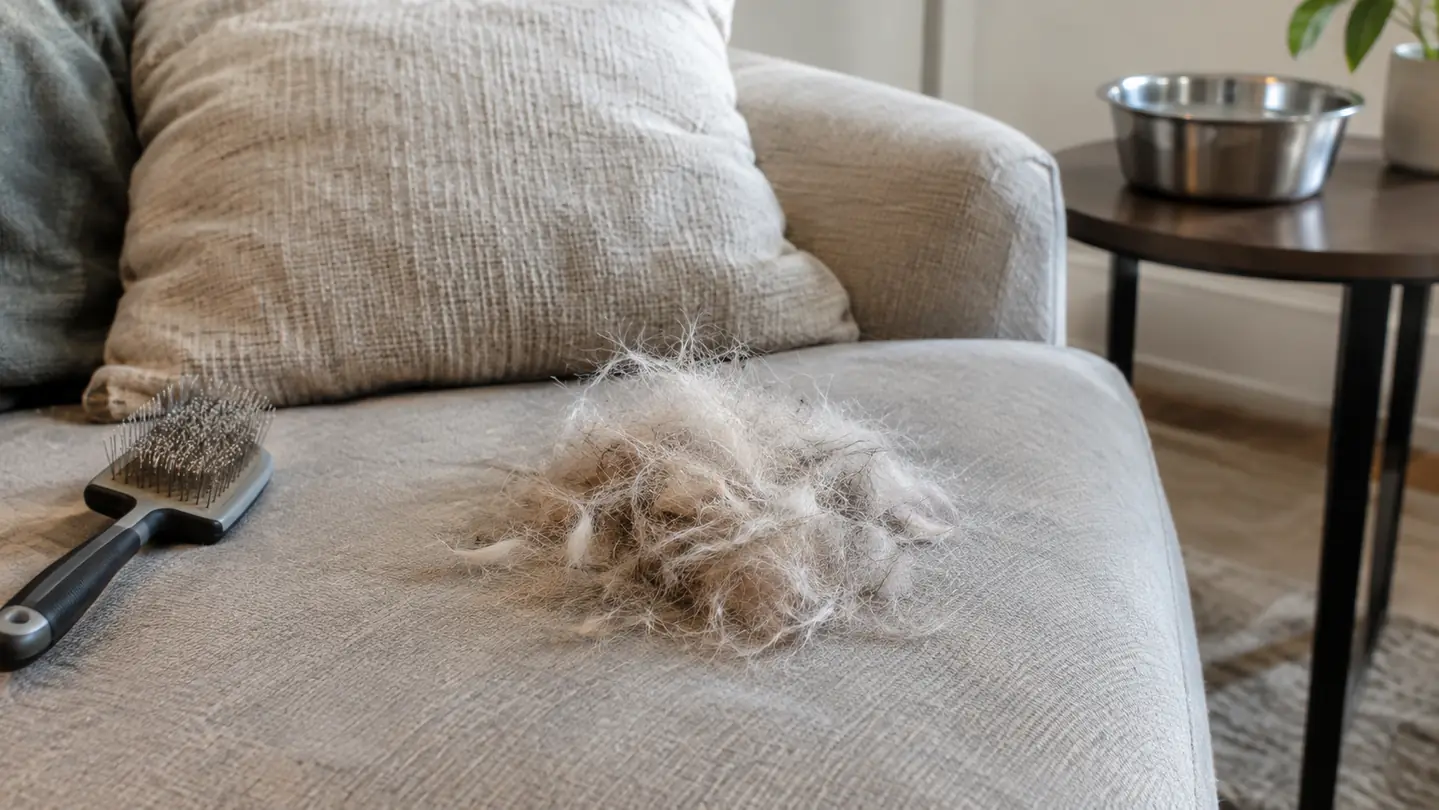
Once a week, after the glove pass, I take the vacuum to the couch with the crevice tool. This is the only way I have found to get the hair out of the seams where the cushions meet the back and the sides. A wide brush attachment just pushes the hair deeper into the gap.
Go slowly along each seam and lift the cushions to get the edges. If you have a couch with removable cushions, take them off and vacuum underneath at the same time. This is also the moment to check for crumbs, because dog hair and snack crumbs seem to collect in the exact same spots.
I do the full vacuum pass about every seven days. On the days in between, the rubber glove is enough to keep the couch presentable. The combination of the weekly FURminator session, the cover, and this vacuum routine has cut my couch cleaning time way down.
I found this out the hard way last fall. I had been using the wide brush attachment for months and wondering why the seams still looked furry. One Sunday I pulled the cushions off and found a solid line of hair packed along the back edge of the seat base, about as thick as a pencil. The crevice tool pulled it out in one slow pass. Now I do the seams first and the open cushions second, and I check under the cushions every time because that is where the hair goes to hide.
Step 5: Stay on a regular deshedding schedule
The single best thing I did was stop treating deshedding as an occasional chore. Juno sheds year round, so I brush her once a week with the FURminator and add a second session during the worst of spring and fall. The loose hair never gets the chance to build up, and the couch stays cleaner without any extra effort on my part.
The FURminator has a built-in button that releases the collected hair so you can keep working without stopping to pick hairs off the blade. That sounds like a small thing, but it makes the weekly session quick enough that I actually stick with it. A grooming routine only works if it is easy enough to keep doing.
One warning: the FURminator is meant for the undercoat, not for mats or tangles. If your dog has matted hair, work those out with a dematting comb first. And do not overbrush any one spot. A few light passes in each area is enough, and your dog will let you know when they have had enough.
I mark the brushing day on the calendar, the same way I mark trash day. Sunday afternoons after football starts. That reminder is the only reason the routine survived the first month. Once I got into the rhythm, I noticed the difference within two weeks: less hair on the couch, less hair on my pants, and less hair floating across the kitchen floor when the afternoon sun hits it. The schedule matters more than the tool, but the tool is what makes the schedule worth keeping.
What Else Helps
Beyond the deshedding tool and the couch cover, a few small habits made our house noticeably less hairy. I wash Juno's bedding on the same day I vacuum the couch, so the loose hair from her bed does not drift back onto the furniture. I also keep a lint roller in the car and one by the front door, because dog hair travels on clothes and ends up on the couch when you sit down. And when the weather allows, I brush Juno outside so the birds get first crack at the undercoat. It is not a scientific system, but it is a system that works for us.
Five minutes with the FURminator removes more loose hair than a week of vacuuming the couch, and it gets the hair before it ever lands on the cushions.
What I'd Tell You If We Were Sitting at My Kitchen Table
If you came over and asked me how to cut down the dog hair on your couch, I would tell you to stop fighting the furniture and start with the dog. The FURminator Large Dog Undercoat deShedding Tool for Short Hair is the best tool I have found for pulling the loose undercoat out before it becomes couch hair. It is not magic and it will not stop shedding entirely. But it cuts the amount of hair that reaches the couch by a wide margin, and it is a lot easier on my back than hovering over the cushions with a lint roller.
Start with one good session outside. See how much loose hair comes off a dog you thought was not shedding that much. Then put a washable cover on the couch and keep the rubber glove in the drawer. Ten minutes of prevention beats an hour of cleaning every time.
Start with the tool that actually works
The FURminator deshedding tool is the reason our couch is no longer a hair magnet. If you are ready to cut down the dog hair in your house, this is where I would start.
Amazon Check Today's Price on Amazon →