

I have owned Juno for six years, and for six years I have lost the war against her hair. She is a 62-pound short-coated mixed breed with a dense undercoat, and she sheds every single day of the year. I vacuumed twice a week, brushed her with a standard slicker brush, and still found tufts of fur on the couch, in my coffee, and somehow on the ceiling fan. So when I finally bought the FURminator Large Dog Undercoat deShedding Tool for Short Hair, I will admit I expected another brush that would end up in the hall closet with the others. What I got instead was the closest thing to a haircut for a dog that I have ever performed at home.
This is the honest version of that experience. Not the product page version, not the five-star version. I used this tool on Juno every three to four days for six months, through a Pacific Northwest winter and into spring, and I kept notes on what impressed me, what frustrated me, and what I think the marketing glosses over. If you are trying to decide whether the FURminator is worth it, here is what nobody tells you.
The Quick Verdict
The FURminator genuinely cuts loose undercoat hair in a way my other brushes never did. It is expensive, it has a learning curve, and it will not fix shedding overnight, but for a short-coated dog that sheds year round, it is the most effective tool I have tried.
Amazon Check Today's Price →Cut the loose undercoat before it lands on your couch
The FURminator deShedding Tool reached the loose undercoat hair that three other brushes missed. If you are tired of vacuuming dog hair off every surface, this is the tool to try first.
Amazon Check Today's Price on Amazon →How I Used It
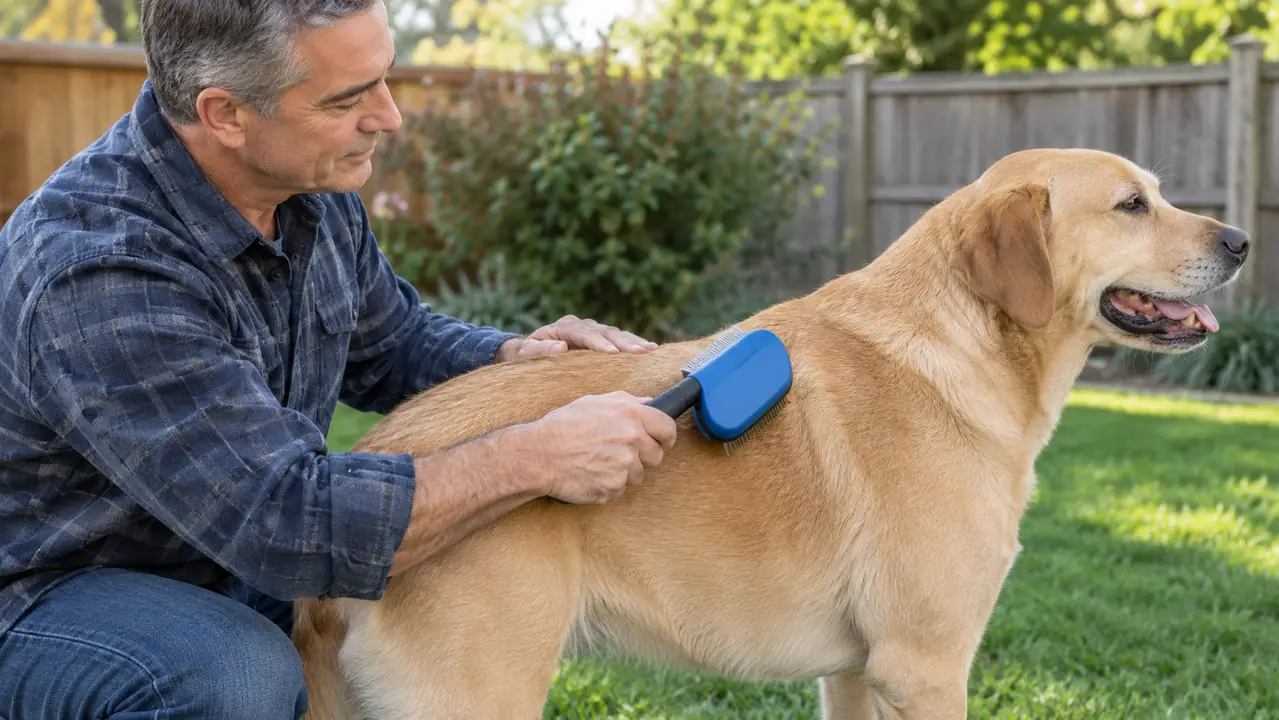
I did not follow the instructions perfectly at first, and I think that is worth admitting. The FURminator comes with a plastic guard on the blade, and the instructions tell you to press the guard into the coat so the blade stays at the right angle. The first time I used it, a rainy Tuesday in early November, I skipped the guard and just dragged the tool across Juno's back like I would any other brush. It pulled, she flinched, and I thought the whole thing was overhyped. Then I read the instructions again, used the guard the way it was designed, and the difference was immediate. The tool glided through her coat and started pulling up grayish clumps of undercoat that I had never seen come out of her before.
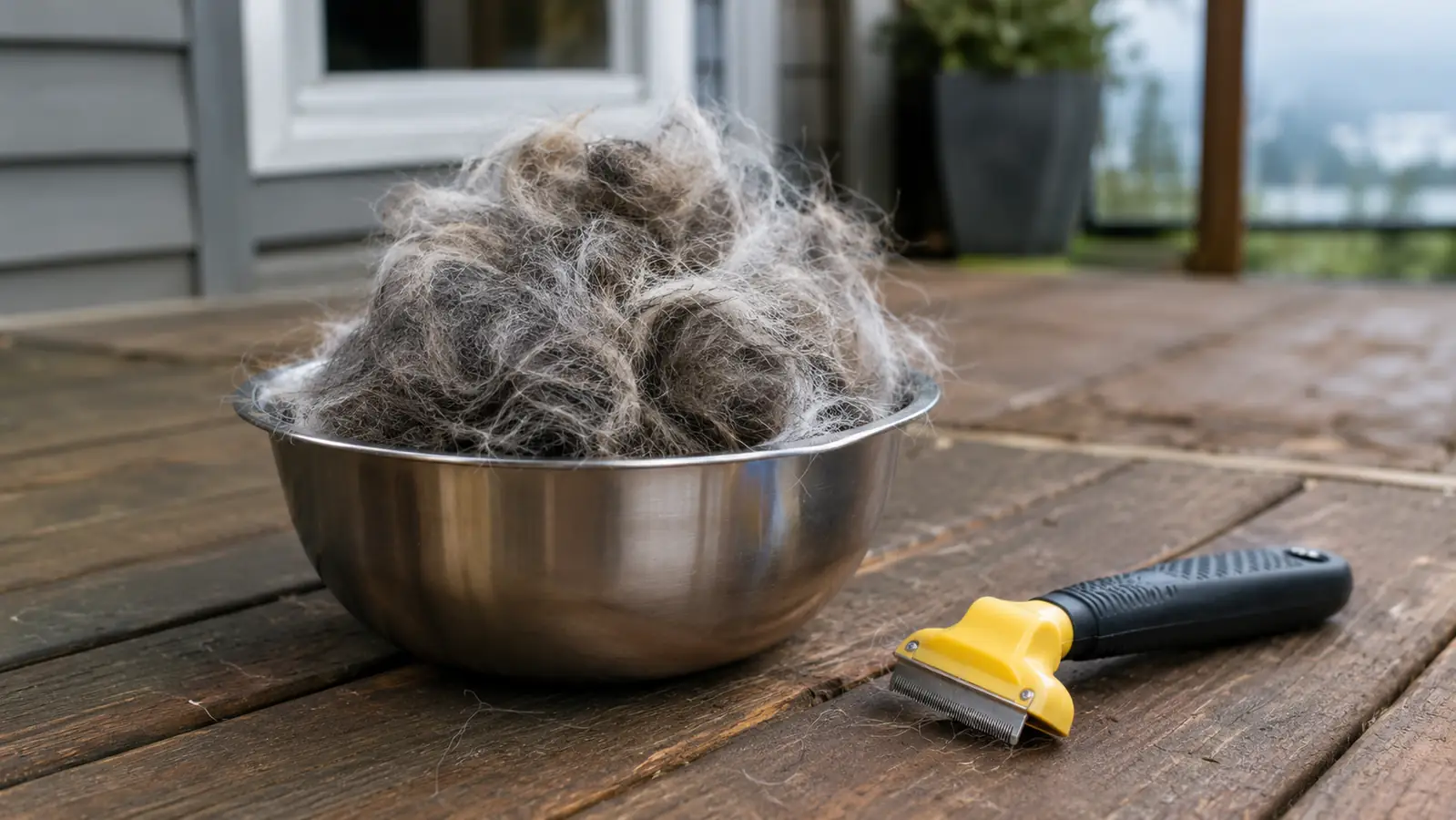
I used it every three to four days for about twenty minutes per session. Juno is not a patient dog during grooming, so I worked in sections: back, sides, chest, and haunches, with treats between sections. The first proper session took thirty-five minutes, mostly because I kept stopping to stare at the pile building up on the porch boards. By the time I finished, the mound of hair was bigger than Juno's head, and Carol came out to see what I was laughing at. She took one look at the pile and went back inside for the camera.
I used it outdoors on the back porch whenever the weather allowed, because the amount of hair that comes off is genuinely startling. Inside, even with the guard, it would have coated my kitchen in fur. I also learned to clean the blade every five or six strokes. The ejector button works well, you slide it and the collected hair pops off in one strip, but if you let the blade fill up, the tool just skims the top of the coat and does nothing. That was my other early mistake, blaming the tool when I was the one who had not cleaned it.
The real test came in April, when the winter coat started letting go. I had been using the FURminator since that first Tuesday in November, so I thought I had the spring shed handled. I was wrong about how much hair a dog can hold. I filled that same mixing bowl twice in one week, which was actually good news, because the year before, that hair would have ended up on the couch, the stairs, and everywhere else I was vacuuming twice a week. The tool was doing its job. I just had to keep up my end.
What Nobody Tells You About the FURminator
The first thing nobody tells you is how much hair comes off. I filled a stainless steel mixing bowl about two-thirds full in a single session the first week. That is not an exaggeration. Juno has a dense undercoat, and the FURminator reaches it in a way that a slicker brush or a rubber curry comb never did. I had no idea she was carrying that much loose fur around, and neither did she, apparently, because she seemed more comfortable after each session. Out of curiosity I weighed the hair one week, using the kitchen scale Carol keeps for flour. Three sessions produced about four ounces of undercoat. That is a quarter pound of hair off one 62-pound dog in nine days, and I suspect I was not even getting all of it.
The second thing nobody tells you is that the FURminator has a learning curve. The blade is sharp, and if you press too hard or use it at the wrong angle, you can irritate the skin. I learned this the hard way in mid-December, when I noticed a small red patch on Juno's flank after a session where I got impatient and pressed harder than I should have. I had been in a hurry because a rainstorm was rolling in, and I rushed the last few strokes on her left side. The spot was about the size of a quarter, it cleared up in a couple of days, and I never made that mistake again. But the warning label is not just legal cover. This is a tool that requires attention.
The third thing is that the hair goes everywhere. The FURminator does not contain the hair it removes. It flicks it into the air, onto your clothes, and across the floor. Outdoors this is fine. Indoors it is a mess. I learned to groom Juno on the porch with a trash bag nearby, and I still found fur on my socks for two days afterward. One windy afternoon in February I groomed her when a breeze was up, and the hair drifted across the yard and stuck to the wet fence boards. The fence wore a gray trim for two weeks, and Carol still brings that up when I talk about how well the tool works. Pick a calm day, or do it in the garage with the door down.
The fourth thing, and the one the product page glosses over, is that this tool has parts that wear out. The blade stays sharp for a long time, I have used mine since November without a problem, but it will eventually dull, and the company sells replacement heads as a separate purchase you have to plan for. The plastic guard also takes a beating, because you press it into the coat on purpose, and mine is starting to show wear at the corners. This is not a buy-it-once-and-forget-it tool. It is more like a good pair of shears, something you maintain.
I filled a stainless steel mixing bowl two-thirds full of loose undercoat in a single session. No other brush I own has ever done that.
The Good, the Annoying, and the Ugly
Let me break down the honest picture. The good: the FURminator removes loose undercoat hair more effectively than anything else I have tried. It is well built, and the handle is comfortable for my hands, which matters more than you would think when you are holding it for twenty minutes. I am fifty-eight and I have the beginnings of arthritis in my right thumb, but the FURminator does not cramp my hand the way the shedding blade did. The blade sits firmly in the head with no wobble, the ejector button releases the collected hair cleanly most of the time, and the cutting edge stays sharp. I have used this thing since November and I have not noticed any loss of power.
The annoying: it is not a quick tool. A thorough session takes me about twenty minutes, and Juno gets restless around minute fifteen. I have to bribe her with treats and take breaks. The tool also requires more care than a standard brush. You cannot just yank it through the coat the way you would a slicker brush, and you have to clean the blade frequently because it fills up fast with hair. Every five or six strokes I stop, slide the ejector, and shake the hair into the bag. On dry winter days the hair sticks to the blade with static and to my forearms, so I started wearing an old long-sleeved shirt for grooming sessions. It keeps the fur off my arms and keeps the washing machine from picking up a coating of it.
The ugly: the price. The FURminator costs more than three times what a decent slicker brush costs, and that is a real barrier. I almost did not buy it for that reason. I put it in my cart, took it out, and put it back three times over the course of a week before I ordered it. What convinced me was thinking about my own time: I was spending close to an hour a week brushing and vacuuming, and this tool looked like it could cut that in half. Six months later, that is roughly what happened. I will also say that if your dog has sensitive skin, a thin coat, or a short coat without much undercoat, this tool is probably not for you, and the manufacturer's own guidance points the same direction. It is designed for dogs with undercoats, and using it on a dog without one is like using a snowplow on a sidewalk. And because the blade is a blade, you have to stay alert the whole session. There is no coasting with this tool the way there is with a brush, even after six months of practice.
How It Compares to What I Used Before
Before the FURminator, I rotated through three tools: a standard slicker brush, a rubber curry comb, and a shedding blade. The slicker brush was fine for the topcoat but did nothing for the undercoat. I could brush Juno for fifteen minutes and the undercoat stayed put. One Saturday in October, before I bought the FURminator, I brushed her for twenty minutes, vacuumed the whole house, and then sat down on the couch. Five minutes later I stood up and my jeans were covered in hair. That was the day I started seriously looking at deshedding tools. The rubber curry comb was great for massage and for loosening surface dirt, and Juno loved it, she would lean into it and close her eyes, but it only collected a thin layer of fur. The shedding blade caught more hair, but the teeth were too widely spaced for her fine undercoat, so it skidded across the top and never pulled the deep undercoat the way the FURminator does.
The difference showed up in the numbers, or at least in the observable evidence. With my old tools, I was vacuuming twice a week and still finding fur on my clothes. With the FURminator, I groom Juno every three to four days and vacuum once a week. The vacuum bag, which I used to replace every three weeks, now lasts five or six. My couch, which used to look like it had a fur throw blanket, now stays mostly clean between sessions. That is the kind of result I can feel, not just measure.
I also tried one cheap deshedding rake from a big box store before I committed to the FURminator. It was a fraction of the price, and it did pull out some undercoat, but the tines were too aggressive for Juno's skin and she fought me the whole time. I used it twice and put it in the drawer where it still sits. That failed experiment is part of why I hesitated so long on the FURminator. I did not want to spend the money and get another drawer ornament. What finally changed my mind was reading that the FURminator has a guard that sets the blade angle, which is exactly what the cheap rake was missing. The guard makes the difference between a tool that drags and a tool that glides.
What I Liked
- Pulls out loose undercoat that slicker brushes, curry combs, and shedding blades all missed, and it is obvious from the first session
- Cut my vacuuming from twice a week to once a week and kept the couch presentable between sessions
- Comfortable handle, sharp blade that lasts, and an ejector button that makes cleanup fast
- Works on cats too, if your cat will sit still for it
Where It Falls Short
- The blade has a real learning curve and can irritate skin if you rush or press too hard
- Costs several times what a decent brush costs, which is a hard pill to swallow before you know it works
- The removed hair goes everywhere, so you need to groom outdoors or somewhere easy to clean
- Not for single-coated dogs, dogs with thin coats, or anyone who will not read the instructions
Who This Is For
The FURminator is for you if you have a short-coated or medium-coated dog with a real undercoat, and if shedding is driving you up the wall. It is for owners who are willing to spend twenty minutes every few days and who can follow the instructions about angle and pressure. It is for people who would rather pull the loose hair out in one controlled session than find it all over the house for the rest of the week. If you have a dog like Juno, a mixed breed with a dense undercoat that sheds year round, this tool will probably be the best grooming purchase you make.
Who Should Skip It
You should skip the FURminator if your dog has a very short, thin coat with little to no undercoat. A single-coated dog does not need this tool, and you will be paying a lot of money for something that just skims the surface. You should also skip it if your dog has sensitive or irritated skin, because the blade can make things worse if you are not careful. And if you are not willing to read the instructions and go slowly, you are better off with a gentler brush that will not punish your mistakes.
I will also add a note for cat owners, because the FURminator makes a version for cats and I have tried it on my cat Pepper. Pepper is an 11-pound indoor shorthair, and she hates being groomed. I waited until Carol was home to help, and even then we only managed about five minutes before Pepper decided she was done. The FURminator worked on her too, but it was a two-person job and she made her opinion known the whole time. We still got a respectable pile of hair off her in those five minutes, more than the slicker brush ever collected in a full session. For a cat that tolerates grooming, it is effective. For a cat like Pepper, you may end up with more scratches than loose hair.
The honest bottom line: it worked for my shed-prone dog
Six months in, the FURminator is the tool I reach for first. It cut my vacuuming in half and pulled out loose undercoat no other brush touched. Check the current price and see if it fits your budget.
Amazon Check Today's Price on Amazon →